Aluminum casting is utilized in this modern production overview.
Leading Benefits of Deciding On Aluminum Factory Parts for Industrial Applications
Light weight aluminum foundry parts present numerous benefits for commercial applications. Their lightweight yet robust nature boosts efficiency in taking care of and installment. Furthermore, aluminum's exceptional corrosion resistance adds to its resilience, which is necessary for reducing upkeep expenses in time. With its flexible layout capacities and outstanding machinability, light weight aluminum enables the production of customized parts. Aluminum Foundry. These attributes make light weight aluminum an engaging choice, but the discussion does not end here. There are much more benefits worth checking out
Solid yet lightweight: The Benefit of Light weight aluminum
Light weight aluminum, a metal renowned for its remarkable strength-to-weight proportion, provides considerable advantages in commercial applications. Its light-weight nature makes it possible for suppliers to develop components that are much easier to deal with, transport, and install, inevitably decreasing labor expenses and boosting performance. This characteristic is especially advantageous in sectors such as aerospace and automobile, where weight decrease can cause enhanced gas effectiveness and efficiency.
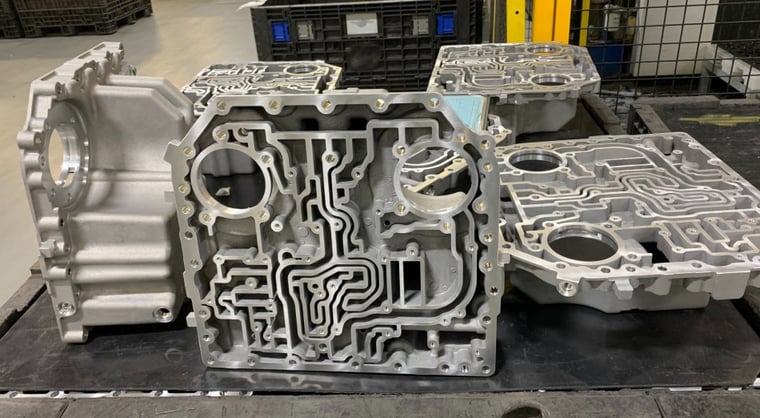
Rust Resistance: A Key Advantage for Longevity
One of the standout properties of aluminum is its remarkable corrosion resistance, which greatly adds to the longevity of components made from this steel. This intrinsic capability to resist oxidation and deterioration allows aluminum foundry parts to carry out accurately in different commercial atmospheres, consisting of those revealed to dampness, chemicals, and severe temperatures. Unlike various other metals that might catch rust or deterioration in time, light weight aluminum develops a safety oxide layer that shields it from ecological variables. This attribute not just extends the lifespan of components however additionally minimizes the need for constant upkeep or replacement. Industries such as aerospace, automobile, and marine specifically advantage from aluminum's longevity, making sure that components preserve stability and performance over long durations. Consequently, choosing light weight aluminum factory components can result in boosted operational efficiency and minimized downtime, making them an excellent selection for requiring industrial applications.
Cost-Effectiveness: Decreasing Overall Manufacturing Expenses
While many aspects add to the general efficiency of manufacturing processes, the cost-effectiveness of aluminum shop components sticks out as a substantial benefit. Light weight aluminum's lightweight nature lowers transportation costs and energy intake during manufacturing. Additionally, its exceptional machinability permits quicker processing times, lowering labor costs and improving productivity.
Additionally, aluminum factory parts generally exhibit reduced product costs compared to other metals, making them an economically viable choice for suppliers. The resilience of aluminum also adds to lasting savings, as components call for less regular replacement and maintenance.
Additionally, the recyclability of aluminum can result in minimized garbage disposal expenses and promote sustainability initiatives, even more boosting its appeal. By integrating aluminum factory components into their operations, organizations can achieve significant decreases in general manufacturing costs, eventually bring about improved profit margins and affordable benefit in the industrial field.
Versatility in Design: Tailoring Elements to Certain Requirements
A remarkable aspect of aluminum shop parts is their adaptability in layout, permitting manufacturers to tailor parts to fulfill certain operational needs. This flexibility stems from aluminum's pliability and lightweight nature, enabling intricate forms and styles that can be personalized for diverse applications. Whether for automobile, aerospace, or commercial equipment, light weight aluminum factory parts can be engineered to accommodate unique specs, guaranteeing suitable efficiency and performance.
Moreover, progressed spreading strategies facilitate the production of complicated geometries that standard products might battle to achieve. This capacity allows designers to introduce and fine-tune product layouts without being constrained by product limitations. Furthermore, aluminum's compatibility with various finishings and finishes additionally enhances its style convenience, permitting functional and visual improvements tailored to operational needs or details environments. Subsequently, manufacturers gain from a tailored method that meets both performance and design requirements, making aluminum shop components a preferred option in numerous industrial applications.
Boosted Thermal Conductivity: Improving Effectiveness
The improved thermal conductivity of aluminum foundry parts greatly adds to boosting effectiveness throughout numerous industrial applications. Light weight aluminum's ability to carry out warmth successfully permits rapid warmth dissipation, which is crucial in situations requiring temperature law, such as in warm exchangers and engine elements. This characteristic minimizes thermal tension, extending the life expectancy of components and lowering maintenance prices.
Furthermore, boosted thermal conductivity facilitates quicker home heating and cooling cycles, optimizing power use. Therefore, procedures become a lot more effective, resulting in lowered operational costs and boosted productivity. Industries such as automobile, aerospace, and electronic devices benefit significantly from these properties, as they call for materials that can stand up to and handle warm properly.
Eco-Friendly Selection: Sustainability in Manufacturing
Sustainability in manufacturing has come to be a vital emphasis in today's commercial landscape, and light weight aluminum factory parts attract attention as an environmentally friendly selection. Making use of light weight aluminum is inherently lasting because of its recyclable nature; it can be reused consistently without loss of high quality. This characteristic especially lowers the demand for brand-new basic materials, thus saving all-natural sources.
Moreover, the production of light weight aluminum components commonly generates fewer greenhouse gas exhausts compared to other steels, making it a greener alternative for manufacturers. The lightweight nature of aluminum also adds to power savings in transportation and application, as lighter components need less power to relocate and run efficiently.
In enhancement, lots of aluminum factories are increasingly adopting sustainable practices, such as using renewable energy resources and reducing waste. Generally, picking aluminum foundry components straightens with the expanding focus on environmentally friendly manufacturing, promoting an extra sustainable commercial future.
Easy Machinability: Simplifying Production Processes
The easy machinability of light weight aluminum shop components significantly enhances tooling performance in commercial applications. This quality not just lowers manufacturing time but also permits the usage of versatile machining techniques. Consequently, suppliers can streamline their processes while maintaining high-quality result.
Boosted Tooling Performance
Improved tooling performance is necessary for optimizing production processes in light weight Home Page aluminum factories. The lightweight nature of light weight aluminum considerably adds to its machinability, permitting for faster and a lot more precise reducing operations. This ease of machining lessens tool wear and decreases the total strain on equipment, allowing longer tool life and constant top quality in manufacturing. Additionally, light weight aluminum's desirable thermal conductivity assists in dissipating warm throughout machining, which can improve device efficiency. The streamlined arrangement procedures connected with aluminum components bring about quicker adjustments and lowered downtime, thereby improving workflows. By leveraging these attributes, manufacturers can attain greater efficiency degrees while maintaining strict quality requirements in their assembly line, eventually cultivating more efficient operations within the factory setting.
Minimized Manufacturing Time
While the machinability of light weight aluminum considerably adds to decreased manufacturing time, its attributes prolong beyond plain ease of construction. The lightweight nature of aluminum permits for quicker handling and transport during the production process, which streamlines procedures. Aluminum's outstanding thermal conductivity facilitates quicker cooling times throughout spreading and machining, increasing the general production cycle. Its resistance to rust indicates less downtime for upkeep, permitting continuous production runs. Additionally, the ability to attain limited tolerances with minimal effort brings about less versions and reworks, additionally enhancing performance. Altogether, these variables setting light weight aluminum as a product that not just simplifies production processes but also noticeably reduces lead times, guaranteeing prompt delivery of parts in industrial applications.
Versatile Machining Techniques
Aluminum's very easy machinability permits a range of flexible machining strategies that considerably simplify production procedures. This material can be easily cut, formed, and developed using approaches such as CNC machining, milling, and transforming. These techniques enable manufacturers to achieve limited resistances and intricate styles with very little initiative. Furthermore, light weight aluminum's lightweight nature reduces the endure cutting devices, enabling longer device life and lowered upkeep prices. The capability to swiftly adapt to various layouts additionally improves production performance, making aluminum a suitable option for markets needing rapid prototyping and personalization. Generally, the variety of machining choices available for aluminum foundry parts not only simplifies operations however additionally adds to cost-efficient manufacturing remedies.
Regularly Asked Questions
Exactly How Does Light weight aluminum Contrast to Other Metals in Factory Applications?
Aluminum is lighter and extra corrosion-resistant than several steels, making it beneficial for my link shop applications. Its superb thermal conductivity and simplicity of casting also add to its popularity over standard materials like steel or iron.
What Industries Advantage A Lot Of From Light Weight Aluminum Shop Components?
The automotive, aerospace, and electronics markets profit substantially from aluminum foundry components. Their lightweight, corrosion-resistant buildings boost performance and efficiency, making aluminum a perfect choice for components needing resilience and precision in demanding applications.
Are Light Weight Aluminum Shop Parts Recyclable?
Light weight aluminum factory components are indeed recyclable. They can be melted down and repurposed, making aluminum a sustainable choice in production. aluminum casting. This recycling process benefits the atmosphere by minimizing waste and saving natural sources
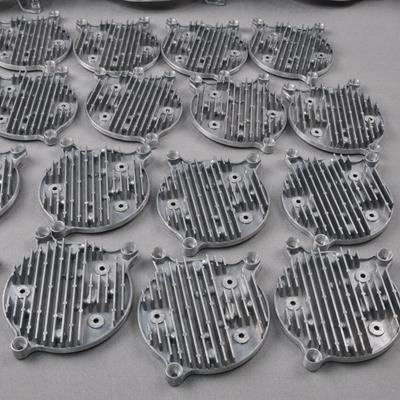
Exactly How Do Aluminum Factory Components Handle Heats?
Light weight aluminum foundry parts show outstanding thermal resistance, enabling them to hold up against heats without significant contortion. Their lightweight nature and thermal conductivity even more boost performance, making them appropriate for demanding commercial environments and applications requiring warmth durability.
What Surface Area Therapies Are Offered for Light Weight Aluminum Foundry Elements?
Aluminum foundry parts can go through different surface therapies, including anodizing, powder layer, and chromate conversion. These therapies improve deterioration resistance, enhance wear residential or commercial properties, and supply aesthetic coatings, thus boosting the general performance and longevity of the parts.
Light weight aluminum shop parts present numerous benefits for industrial applications. An exceptional facet of visit this site right here aluminum foundry components is their versatility in design, allowing manufacturers to customize elements to meet particular functional demands. Aluminum Casting Company. The improved thermal conductivity of aluminum shop parts significantly contributes to boosting effectiveness across numerous industrial applications. Sustainability in production has actually ended up being a vital focus in today's commercial landscape, and aluminum shop parts stand out as an eco-friendly selection. The very easy machinability of light weight aluminum factory parts significantly enhances tooling efficiency in industrial applications